Sunday, April 3, 2016

Weiss, Michael & Hassan, Hassan (2016): ISIS: Inside the Army of Terror

What is it about?

The book describes the origins and history of the movement (without a better word for it) as well as its current operating principles and broad aims. The book is structured loosely in this manner, with the first half covering the history and the second half its current setup.

Was it good?

Without a rich knowledge and understanding about Middle Eastern politics, I found the first half of the book somewhat difficult to follow. This is not to say that it would not have been excellently researched and written, rather, the it is evidence of my deficient knowledge of the matter. For this reason, I found the latter half more interesting and accessible. Especially the means of recruitment, communication and coordination based on utilization of social media tools and quite mindful management of public relations/image made quite fascinating reading.

The main take-away for me?

Well, the book - like the abundant media stories featuring the movement and its undertakings - is bound to raise all kinds of thoughts, but during the latter half of the book I kept constantly thinking about the role of ever more efficient means of communication in shaping public discourse and political action, both local and global. Namely, it seems to me that such means have in addition to their intended consequences (c.f. Facebook's Mission statement) a very broad repertoire of unintended consequences which may be - at least so it currently seems - even more consequential than the intended consequences. While this is not too striking an observation, a good question is, what societal actions if any should we individually or collectively take to address those.

Who should read the book?

I think that the topic of the book appeals to anyone, but this particular book perhaps finds its best audience in those who already know quite a bit about Middle Eastern and global politics as well as have an above-average interest in the subject matter.

The book on Amazon.com: ISIS: Inside the Army of Terror

Tuesday, March 22, 2016

Postman, Neil (1985): Amusing Ourselves to Death: Public Discourse in the Age of Show Business

What is it about?

The book is a critical social commentary on public discourse, which is highly critical towards the television in particular with regard to the generalized epistemology of sorts it promotes. The point of comparison for Postman is the book - or more generally the print culture - which in his assessment compares extremely favorably to the current television-centric culture.

While Postman may be argued to overdo his main arguments - at least with regard to the contemporary media landscape and public discourse in the Scandinavian countries (i.e. his commentary is probably more apt in the USA), both then and now) he seems to have a point here. The point is nicely - though not fully - captured by the following two passages:

"How often does it occur that information provided you on morning radio or television, or in the morning newspaper, causes you to alter your plans for the day, or to take some action you would not otherwise have taken, or provides insight into some problem you are required to solve?"

"Of course, in television's presentation of the "news of the day," we may see the Now...this" mode of discourse in it's boldest and most embarrassing form. For there, we are presented not only with fragmented news but news without context, without consequences, without value, and therefore without essential seriousness; that is to say, news as pure entertainment."

Thus, in Postman's assessment, we are (already were in 1985) on our way to a Huxlean world where people are rendered politically incapable through enjoyable complacency rather than Orwellian state-induced control.

Was it good?

The book is beautifully written - Postman is an unambiguous master of language and rhetorics. Moreover, the basic line of argumentation if credible with regard to its main concerns. However, the conclusions drawn may be somewhat far-reaching for a Scandinavian reader, though their accuracy may be somewhat different in the USA. In any event, such social commentary as this book is indispensable in that they 'direct one's gaze' and encourage to raise it to meta level from the daily routines and actions. In this, the book excels superbly.

It would be highly interesting to read a sequel to this book in which Postman would apply his critical analysis to our current social media-heavy media landscape. I bet he would have a thing or two to say about Facebook and Twitter, for example, and the (traditional) media which report public discourse taking place on such platforms.

The main take-away for me?

As noted above, the main take-away for me was the refreshing point of view which prompts one to consider our media landscape, public discourse and ultimately the premises of knowing - and acting upon - anything (i.e. epistemology) from a distance. Thus, the book serves a purpose for anyone even though one would not subscribe to the conclusions Postman puts forth.

Who should read the book?

I firmly believe that anyone with any intellectual curiosity would be quite well-served in reading the book. Moreover, it seems to me that even though the book was written more than three decades ago, social commentary related to media and media-mediated epistemology is currently even more relevant than at the time the book was written.

The book on Amazon.com: Amusing ourselves to death

Sunday, March 20, 2016

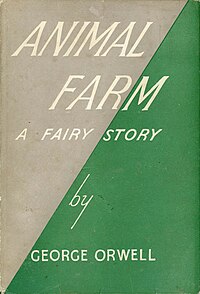
Orwell, George (1945): Animal Farm

What is it about?

As is widely known, the book tells a story about a farm run by animals after they successfully have ousted the human farmer away from the farm.

As is equally widely known, the story is an allegory of a soviet-style communist society, where the analogies are apparent: human=capitalist, animal=member of the working class, animalism=communism and so on.

The story ends at the state where the ruling class, the pigs, have managed to hoard significant powers and privileges to themselves and manage to oppress all the others while being able to maintain a revinisionistic line of a argumentation according to which all this is entirely consistent with the principles of animalism.

Was it good?

Without any doubt yes. As in the case of 1984 by Orwell, this book also is one of the most masterful pieces of social commentary of the 20th century. Perhaps its staying power is not as great as that of 1984 taking into account the 1990s upheaval in the Eastern Europe and its circle of influence but nonetheless, this too - like 1984 - is a book which I very much enjoy reading again every two or three years.

The main take-away for me?

The main take-away of the book for me is somewhat similar to that of 1984. Namely, Orwell nicely highlights the role of argumentation - i.e. Wittgensteinian language games in a sense - in creating, maintaining and reinforcing a social order. Perhaps here Orwell would have been able to construct the story even more subtly, but the message is quite clear nonetheless.

Who should read the book?

As in the case of other Orwell's works, and 1984 in particular, this too is one that should be a part of everyone's basic corpus.

The book on Amazon.com: Animal farm

Orwell, George (1948): 1984

What is it about?

It feels a little unnecessary to introduce such a widely known and appreciated book as 1984, but here goes. It is a dystopian novel which describes an authoritarian society Oceania. In this one-party society, surveillance is everywhere - i.e. the 'Big Brother' is always watching - and public opinion is heavily regulated and manipulated.

While the description of such a society is a significant merit in and of itself to capture our imagination concerning what it would be like to live in a society like or even closely resembling it, in my opinion the vastly greatest merit of Orwell in this book is in describing the means with which such a state of affairs is created and maintained.

Was it good?

Without doubt yes - and the word 'good' can't even begin to do justice to the book. In my list of the best or most important books I have read, this one would easily be in the top three, perhaps even number one. The embedded political commentary is just stunning and the literary elegance with which it is put forth is second to none. I seem to keep coming back to this book every other year or so.

The main take-away for me?

The main take-away for me was - once again - the means with which the dystopian society was put and is held together. The reason for this is that this allows one to reflect back to one's real-life societal context and see whether there are emerging or ongoing initiatives or trajectories that could point to Oceania.

For example, the notion of 'newspeak' (a language from which 'politically dangerous' words are being consciously removed in order to remove the possibility to speak and eventually even think about subversive ideas) is a very powerful reminder for us about the way words (concepts) are used to construct reality. While the 'strength' of this mechanism is subject to debate in academic linguistics and related disciplines (see e.g. here), I'm quite ready to subscribe to its basic reality. Here, consider for example the concepts 'racism' and 'immigration criticism' and their current usage.

Similarly, the notion of a 'thought crime' - a real crime in Oceania - is quite a powerful notion and can quite readily be reflect against current discourse about 'incorrect' socio-political opinions or mindsets. I emphasize here the notions 'thought', 'opinion' and 'mindset' - it's a different story altogether as to how or whether one acts upon one's thoughts.

Who should read the book?

Everyone, absolutely everyone. Moreover, this is a book everyone should read one every few years.

Indeed, in my opinion, this book should be part and parcel of core reading curriculum in every school system everywhere.

The book on Amazon.com: 1984

Friday, March 11, 2016

Siegel, Daniel J. (2011): The Neurobiology of 'We': How Relationships, the Mind, and the Brain Interact to Shape Who We Are

What is it about?

The audio course (i.e. not a proper book) aims to explain how we - or, to be more precise, our minds - interact to create social relationships between us, that is, to construct 'us'.

I chose the  based on the main title and expected it to be 'hard science' (c.f. neurobiology), but it turned out to be a little bit softer. That is, the book is more 'lifestyle-persuading' than just 'here is the science'.

Was it good?

Well, the course was nice listening, but the author's take on the subject matter made me hesitate every now and then as to what's the scientific backing to what is being claimed. I certainly don't have the credentials or neurobiological expertise to challenge anything in the course, but the still I could not escape the feeling.

Thus, I would say that the course is more like 'why not, can't hurt really' than 'must to know'.

The main take-away for me?

Actually, the main take-away for me did not really relate to the subject matter of the course but rather operates at the meta level. Namely, throughout the book I was thinking along the lines 'how and why we 'know' (or believe) anything we know'? This relates to the nagging feeling that I had throughout the course about whether I should believe what the author states or not while not having any relevant expertise to judge it myself. This applies to all kinds of knowledge about, say, fundamental physics or cosmology. In such cases we really have to use some contextual cues to judge the credibility of the information being assessed rather than the information itself - for example, the 'market share' of the idea among people who appear experts (like scientists with credentials in the field).

Who should read the book?

I think that the course 'wouldn't really hurt anyone' but I have hard time of thinking about who would be particularly fascinated by it.

The course on Amazon.com: The neurobiology of 'we'

Wednesday, February 17, 2016

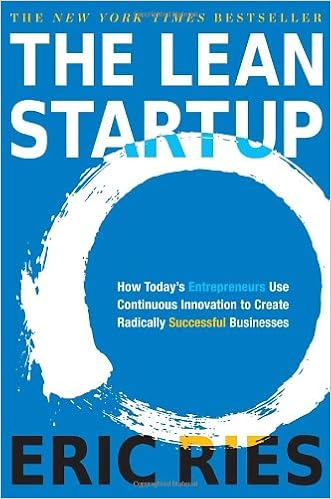
Ries, Eric (2011). The Lean Startup: How Today's Entrepreneurs Use Continuous Innovation to Create Radically Successful Businesses

What is it about?

In the book, the author describes an agile approach to managing (and thinking about) new business ventures, i.e. start-ups. At the heart of the approach is learning: basically launching a "minimally viable product", exposing it to customers, observing their reactions (i.e. learning), translating those observations into a revised product and so on. (This may be an overly simplified take on the process, though.)

The two main goals of this approach are, consistently with 'lean' approaches in general, speed and elimination of waste. For example, with a "minimally viable product" no possibly unwanted features are developed, hence saving time and avoiding potential unnecessary work.

Was it good?

The book was quite intriguing - the main message is loud and clear, and the several case vignettes illustrate the principles in practice. In this sense, the book was rather compelling. However, throughout the book, I kept thinking whether the principles and practices are universally generalisable (though it is debatable whether this is possible with any principle or practice). For example, it may be that there may be contexts where minimally viable products have to include quite an extensive set of features to make it viable at all. Think of smartphones for example: in contemporary smartphone markets it may be quite infeasible for new entrants such as Oppo some years ago to enter the (consumer9 market with a stripped-down product as a minimally viable product - or alternatively the product concept should be quite radically different from mainstream offerings.

The main take-away for me?

The main take-away for me was the application of the scientific method in this kind of a domain, management of new business ventures. That is, the lean approach is based on formulating plausible hypotheses (what the customers would likely appreciate), conducting controlled experiments (exposing customers to the product hypothesised to be compelling), gathering data (observing customers' behaviour) and drawing conclusions (confirming or revising hypotheses, i.e. learning). In addition, the notion of waste and its many manifestations if a welcome reminder to be applied in various domains of professional - and personal - life.

Who should read the book?

Well, of course the prime audience for the book are entrepreneurs and start-up employees, especially in consumer-oriented software companies where the lean approach probably is most readily applicable. However, as the author suggests, all practicing managers or other management thinkers surely get food for thought from the book.

The book on Amazon.com: The Lean Startup

Wednesday, February 3, 2016

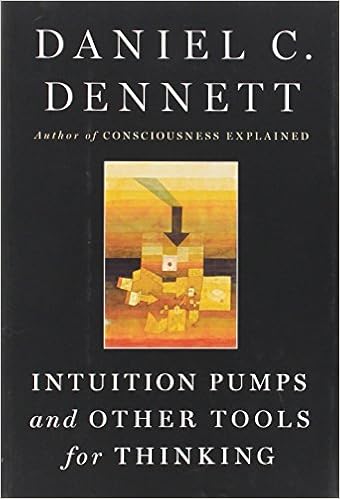
Dennett, Daniel C. (2015). Intuition Pumps and Other Tools of Thinking

What is it about?

The book is, in a way, about two things. First, Dennett discusses (or, at times, introduces) quite generic 'tools of thinking' such as the familiar Occam's razor, and some litmus tests for detecting shabby arguments such as the 'surely test'. And second, Dennett discusses about some substantive domains of thought such as computers, consciousness and biological evolution.

Was it good?

Characteristically for Dennett, the book is enjoyable to read. Especially the relaxed and, at times, 'in your face' style of expression make the reading experience quite pleasant - and argumentation very accessible. To my taste, the first section - about the generic tools of thinking - remains somewhat disconnected from the rest of the book. Moreover, Dennett is in his element in discussing substantive matters such as consciousness and artificial intelligence, and therefore the book would have been just fine - and perhaps a bit more consistent as well - without the first section. Nonetheless, it is an absolute pleasure to follow argumentation of such a deep and no-nonsense-ish thinker as as Dennett.

The main take-away for me?

It's difficult to single out any particular take-away. Perhaps the main take-away is on a more abstract level. Namely, very clear thinking without the need of overly complex mental and rhetorical constructions can take one quite far (though only so far - the powers of 'mere' philosophy often run out when 'serious' science has still plenty of ammunition left). In particular, works like this makes one appreciate the method of the thought experiment as an often indispensable aid to clear thinking.

Who should read the book?

Well, anyone interested in philosophical (i.e. currently poorly understood) issues or the philosophical method is pretty much guaranteed to enjoy the book even if one would not fully subscribe to all Dennett's views and conclusions. For others, it may be that the subjects covered as well as the way they are covered may appear either overly fuzzy (e.g. the nature and origins of consciousness) or even a bit ridiculous (e.g. making a point with an example in which one is inside a robot having to control it by pressing unlabelled buttons while observing a wall of unlabelled lights as guidance).

Still, I very much would recommend this book - like any by Dennett - for anyone with a philosophical bent.